Can visitors watch Kikuma's Otomouma horse-running ritual?
Yes. Kikuma's Otomouma no Hashirikomi is a public-facing shrine festival tradition, usually held on the third Sunday in October at Kamo Shrine in Imabari. Spectators should confirm that year's official programme, arrive before the morning runs and keep clear of the protected horse course.
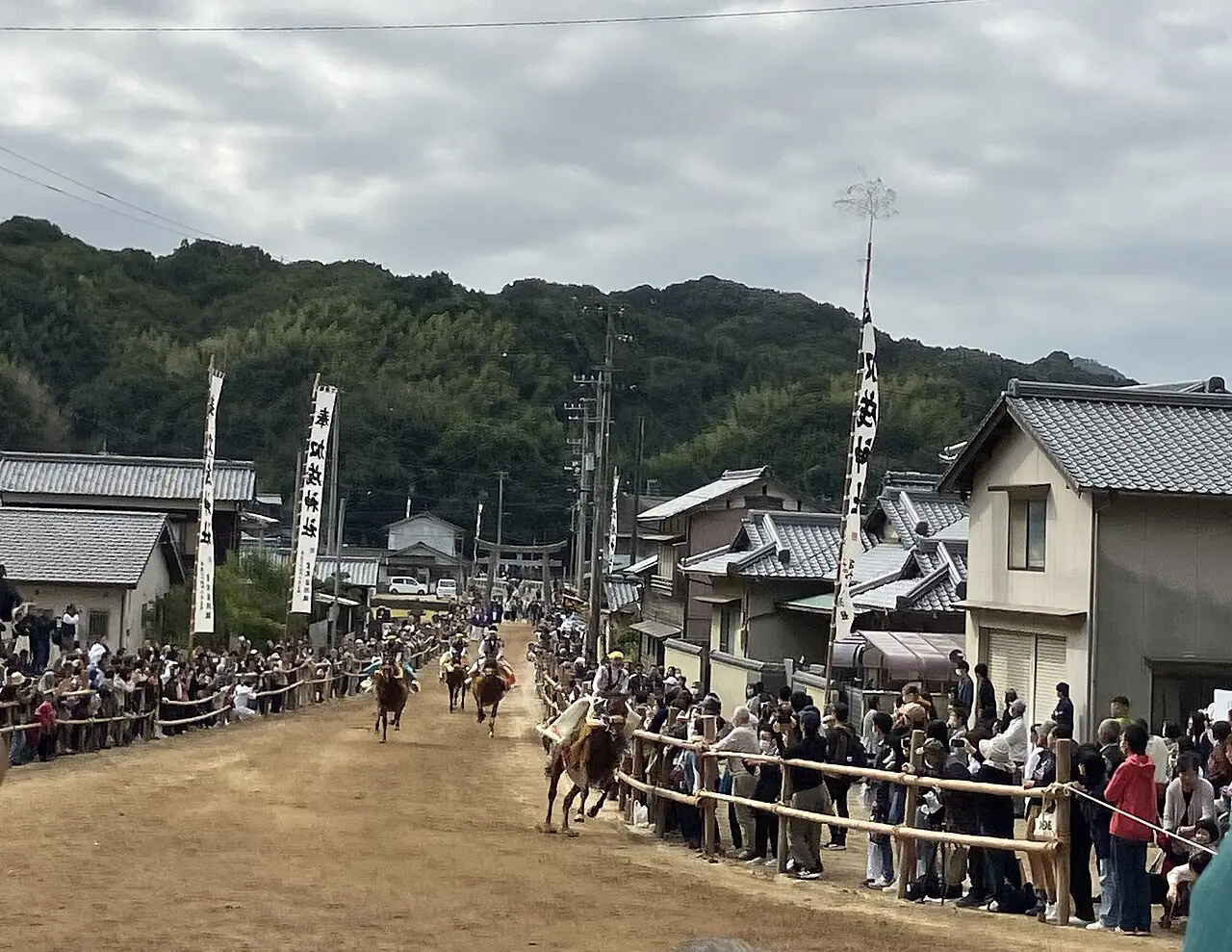
The Otomouma no Hashirikomi (お供馬の走り込み) is a distinctive horse-running rite at Kamo Shrine. Children ride elaborately decorated horses along a straight shrine approach while the community conducts its autumn celebrations.
When is it held?
The shrine's main festival customarily falls on the third Sunday of October. The confirmed 2026 programme runs across two days:
- Saturday 17 October 2026: local parade from Kamo Shrine at approximately 10:30 JST
- Sunday 18 October 2026: ceremonial horse running from about 08:30 to 11:00 JST
These dates and hours are for 2026, not a confirmed future calendar. Check the latest Imabari City event page before organising travel.
Where can visitors observe?
The horses run along an approximately 300-metre shrine approach. The event is a genuine ritual involving children, horses and community volunteers, rather than a staged tourist performance.
Visitor information for the 2026 edition describes JR Kikuma Station as approximately 15 minutes away on foot. Confirm train services and any event-day access restrictions before travelling.
Stand only in designated spectator areas, follow all steward directions and never cross the course, especially while horses are moving. Do not attempt to touch or approach horses or riders without permission.
The festival is recognised as an Intangible Folk Cultural Property of Ehime Prefecture. The tradition is also accompanied by other local performances, including ceremonial processions and dances.