How Community Lion Dances Keep Shikoku's Festival Heritage Alive
Explore how neighborhood shishimai groups preserve music, movement and local ties through recurring festivals.
TraditionsKagawa2 min read
A lion's head moves through the crowd to the beat of drums. The mouth opens, the performers turn, and the cloth body seems to become a creature. Shishimai, Japan's lion-dance traditions, appear in many regions, but each community may have its own rhythm, costumes and reasons for performing.
Kagawa's Miki Town offers a particularly visible example of how neighborhood groups keep this practice going.
More than a festival performance
Shishimai is often connected with shrine observances, harvest seasons and communal hopes for protection or prosperity. Its meaning and form differ by place, so a dance in Kagawa cannot simply be treated as the same ritual as a performance elsewhere.
The lion body requires people to work together, sometimes with performers hidden under the cloth. Drummers and other musicians keep the rhythm while dancers enact steps learned through demonstration and rehearsal. The group creates a collective performance rather than a solo spectacle.
Where the community comes in
A dance's future depends on much more than preserving a costume. Someone maintains the head and fabric, organizes practice, teaches children, arranges the annual performance and coordinates with the shrine or neighborhood.
This makes the preservation of shishimai as much a social question as an artistic one. A community with fewer residents may struggle to recruit and train performers even when its traditions remain important.
Public gatherings allow different teams to meet, compare techniques and inspire younger participants. They also provide a setting where people unfamiliar with the tradition can see the result of many hours of volunteer effort.
Miki's giant shishi
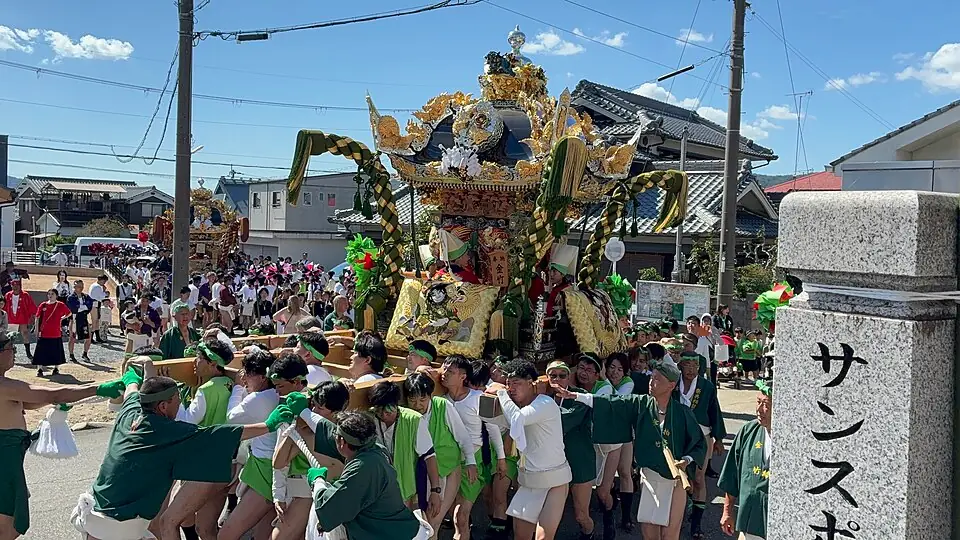
The Miki Mande-gan event in October 2026 assembled around forty local performance groups and displayed three unusually large shishi. The scale helped bring attention to the region's many smaller neighborhood performances, which remain the foundation of the tradition.
A large festival is only one expression of this culture. The quieter work takes place between festival days, in rehearsal spaces, family networks and local associations.
Encountering shishimai respectfully
For visitors, a lion dance may be an enjoyable discovery during a temple journey or visit to a small town. Yet shrine-linked performances can also be religious or community occasions. Follow local directions on access and photography, and allow participants room to move and carry their equipment.
The most memorable part may not be the size of a lion's head, but the visible relationship between the people carrying it, playing the music and watching it with pride.
Sources: Miki Town's official event and program and KSB's festival coverage.