Slow travel in Setouchi: how Kamijima and Shōdoshima sustain island life
From Kamijima's locally guided cycling trips to Shōdoshima's terraced fields and living traditions, two islands explore travel that sustains their communities.
CultureEhime · Kagawa · Shōdoshima5 min read
A slow journey through the Seto Inland Sea can reveal something a checklist of attractions misses: an island is a place where people live, farm, worship and pass on skills, not merely a landscape to visit. Two communities in Ehime and Kagawa offer notably different ways of putting that idea into practice.
In March 2026, the Setouchi DMO Awards recognised Kamijima Tours in the Cycling category and the Shōdoshima Tourism Association in the Sustainability category. The awards, announced on 16 March 2026 after a ceremony on 13 March, were presented for the DMO's 2025 fiscal-year programme. What matters beyond the prizes is the local work they draw attention to.
Kamijima: a cycling journey shaped by relationships
At the northern edge of Ehime, the islands of Kamijima are best reached by ferry. The linked islands of Yugejima, Sashima, Ikinajima and Iwagijima form the Yumeshima Kaidō, a quiet alternative to the better-known Shimanami cycling corridor. Bridges connect those four islands, but visitors arriving from outside Kamijima still need to cross water by boat. The town's visitor guide explains the geography and ferry access.
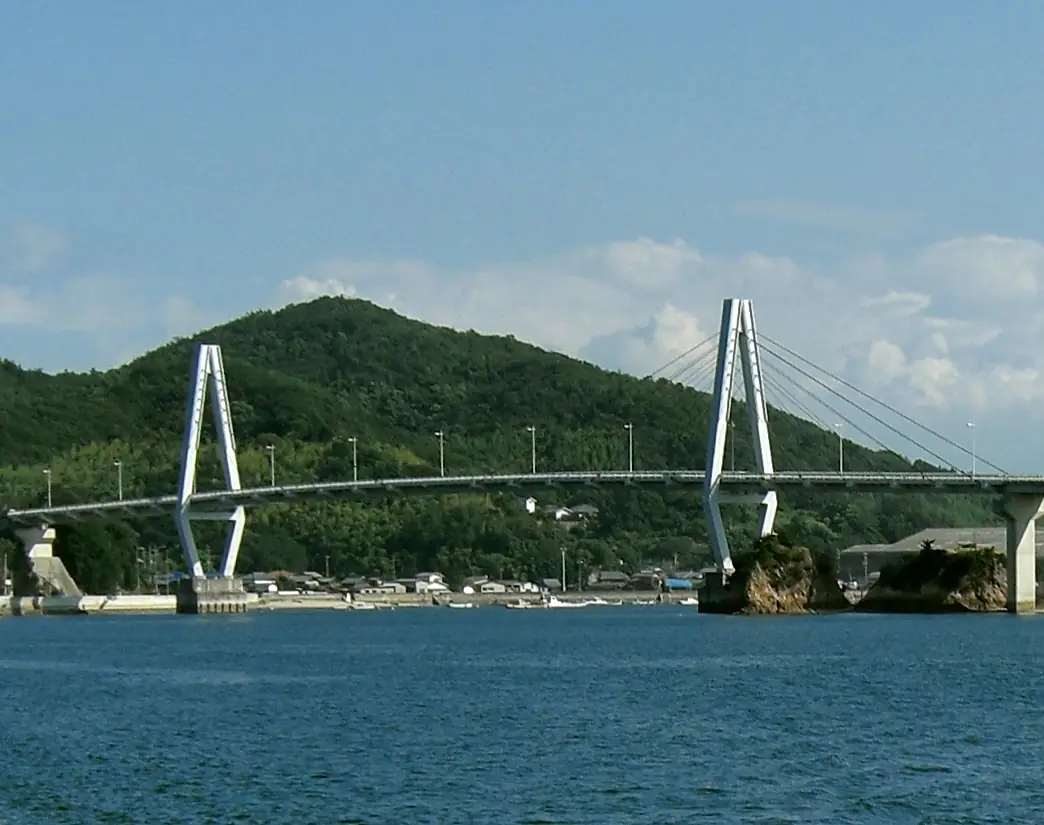
Kamijima Tours, run by Matt and Momo Petersen, builds privately guided visits around this setting. The business began with cycling and has developed an approach in which local conversations, food, working harbours and the rhythm of villages matter as much as the ride. Its own account describes collaborating with island residents, boat captains, cooks, farmers and storytellers. These are people with their own lives and livelihoods, rather than a cast assembled to entertain visitors.
That distinction influences the shape of a trip. Current journey descriptions emphasise small private groups and individual arrangements instead of a fixed sequence of stops. The exact encounters depend on the season, residents' availability and the traveller. The Ehime tourism guide's cycling experience also presents e-bikes as a way to travel at a comfortable pace and meet places beyond the principal viewpoints.
The Cycling award recognises this form of island touring, not the construction of a new cycle path or a large public festival. Its significance is that a small local operator can make a strong case for tourism based on relationships, with visitors contributing to the life of the place they are passing through.
Shōdoshima: keeping a working landscape alive
Across the inland sea in Kagawa, the question is not only how to welcome visitors, but how tourism might help preserve the things that make the island distinctive. The Shōdoshima Tourism Association works with both Shōdoshima Town and Tonoshō Town. In 2025, both towns gained recognition in UN Tourism's Best Tourism Villages programme. The following March, the island tourism association's sustainability work received the Setouchi DMO award.
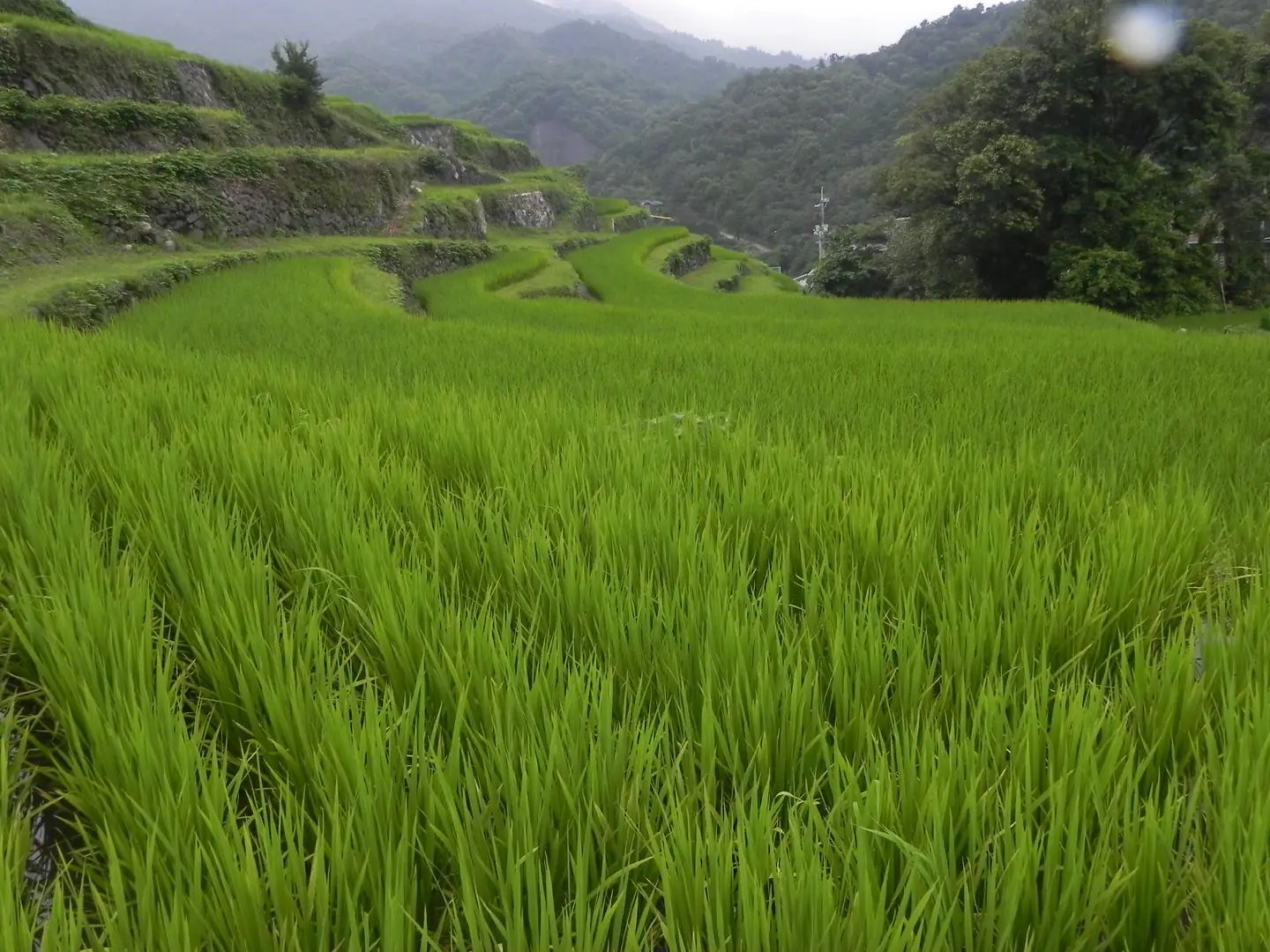
One focus is Nakayama Senmaida, a hillside of approximately 800 terraced rice paddies in the island's interior. The town's account of the site describes fields extending across roughly 12 hectares, sustained by the local water system and generations of farming. Their beauty is inseparable from work: planting, maintaining channels and walls, and harvesting rice. The fields are not an abandoned monument.
The traditional mushi-okuri procession shows how land and custom meet. Historically intended to drive pests from the rice crop and pray for a good harvest, the ceremony carries torchlight through the paddies. A Ministry of Agriculture account describes its agrarian setting; local reporting documents the community's revival of the Nakayama procession in 2011 after a period of interruption. It is a living local observance, not an attraction guaranteed to run on a visitor's preferred evening. Dates and participation rules need to be checked for each edition.
The neighbourhood also holds the historic Nakayama Rural Kabuki Stage at Kasuga Shrine. Local performance traditions belong to the same wider landscape of villages, farming and shared ritual. The association has developed guided visits that bring these elements together; its 2026 Nakayama walking-and-experience programme describes trained Japanese-language guides and English interpretation, rather than suggesting travellers should wander into fields or ceremonies uninvited.
What makes these approaches different?
Kamijima's emphasis is intimate hosting: a small group meets local people through a guide who lives among them. Shōdoshima works on the scale of an entire island, coordinating municipalities, guides, farmers and cultural custodians so that visiting can support long-term care for a place. Both initiatives ask a similar question: who benefits from a visitor's presence, and what will still be here when that visitor has gone?
Awards cannot by themselves prove that tourism's environmental impact has fallen or that every community member benefits equally. The value lies in the documented practices: locally guided experiences, accessible participation, maintenance of traditional farmland, and efforts to keep cultural knowledge in circulation. These activities deserve attention independent of a prize or a marketing slogan.
A wider journey for Shikoku pilgrims
The main 88-temple Shikoku Henro follows sacred sites around Shikoku's four prefectures. Neither Kamijima's cycling tours nor the Shōdoshima rice terraces are stages of that circuit. Yet pilgrims who spend time beyond the standard itinerary may recognise familiar values: patient movement, respectful encounters and hospitality received rather than demanded.
Shōdoshima also has its own 88-site pilgrimage, distinct from Shikoku's main 88 temples. The Shōdoshima Pilgrimage Association publishes routes and temple information, while Kagawa's official tourism guide introduces the island's religious landscape and its occasionally steep mountain paths. A visitor could thoughtfully combine a pilgrimage walk with time learning about the island's fields and village culture without treating either as mere scenery.
Visiting with care
For Kamijima, plan the ferry crossings before the cycling itinerary. Guided journeys are privately arranged and availability varies; check Kamijima Tours' current offerings and the town's transport guidance rather than assuming an everyday scheduled tour.
On Shōdoshima, use the tourism association's current guided-experience information to learn when Nakayama visits are possible. Stay on permitted paths, respect active rice cultivation and do not assume a traditional observance is a drop-in visitor event. Where local guides or hosts are involved, their time and knowledge are part of the experience's value.
Slow travel does not mean travelling without purpose. It means allowing enough time for a place's people, history and ordinary work to become visible. The strongest island journeys leave room for that recognition.
Further reading: Setouchi DMO's official award results; Shōdoshima Tourism Association's award statement; UN Tourism's Shōdoshima profile; Kamijima Tours' approach; Shōdoshima Town's Nakayama site description.