Food along the Shikoku Henro: a taste of four prefectures
From Sanuki udon and Kōchi's seared bonito to citrus, seafood and regional rice dishes, Shikoku's food offers another way to discover the pilgrimage route.
TravelAll Shikoku5 min read
The Shikoku Henro crosses four prefectures whose foods reflect different coastlines, fields, markets and histories. A pilgrim's meal might be a bowl of noodles after a morning climb, fish cooked in a coastal town, fruit bought at a roadside shop or a set dinner at an inn. Eating well is part of the journey, but the route itself does not prescribe a special diet. Knowing a few regional dishes helps walkers choose what to try while respecting their budgets and the practical limits of rural travel.
The four prefectures have dishes that visitors often associate with them, yet local menus change from town to town. This guide introduces food traditions worth recognising and explains how they fit into a pilgrimage day, rather than promising a particular restaurant will be open on arrival.
Kagawa: noodles and everyday hospitality
Kagawa is synonymous with Sanuki udon, firm wheat noodles served in broth or with a dipping sauce. The choice of preparations and toppings is part of the attraction: a simple hot bowl, cold noodles or a few pieces of tempura can make a satisfying pause between temples. The Kagawa Tourism Association's udon guide describes hundreds of shops and notes that many close once their noodles sell out.
Not every shop works like a full-service restaurant. Some are self-service: visitors choose a noodle portion at the counter, add toppings, pour broth and return dishes according to the shop's system. Others provide table service. Watch how local customers order and follow posted instructions. In areas away from town centres, do not count on a particular small udon shop staying open all afternoon. A dependable food stop is as useful as finding the perfect bowl.
Tokushima: sudachi and regional flavours
Sudachi, a small aromatic citrus, is one of Tokushima's characteristic flavours. Its tart juice brightens grilled fish, tofu and noodles, and the rind contributes fragrance. Tourism SHIKOKU's sudachi guide traces the crop's place in local food and explains why fresh, greenhouse and stored fruits appear in different seasons.
Tokushima also has its own rich ramen traditions. Bowls often feature pork or chicken-based broths, soy seasoning, meat and sometimes a raw egg, although the dish varies by shop. At Inotani in Tokushima City, the ramen featured in Lauren Breedlove's August 2026 AFAR journey illustrates how a short city stop can become a memorable part of the walking day. Naruto Kintoki sweet potatoes are another distinctive local product and appear in confections and simple snacks. These foods are choices, not required pilgrim customs.
Kōchi: bonito and market food
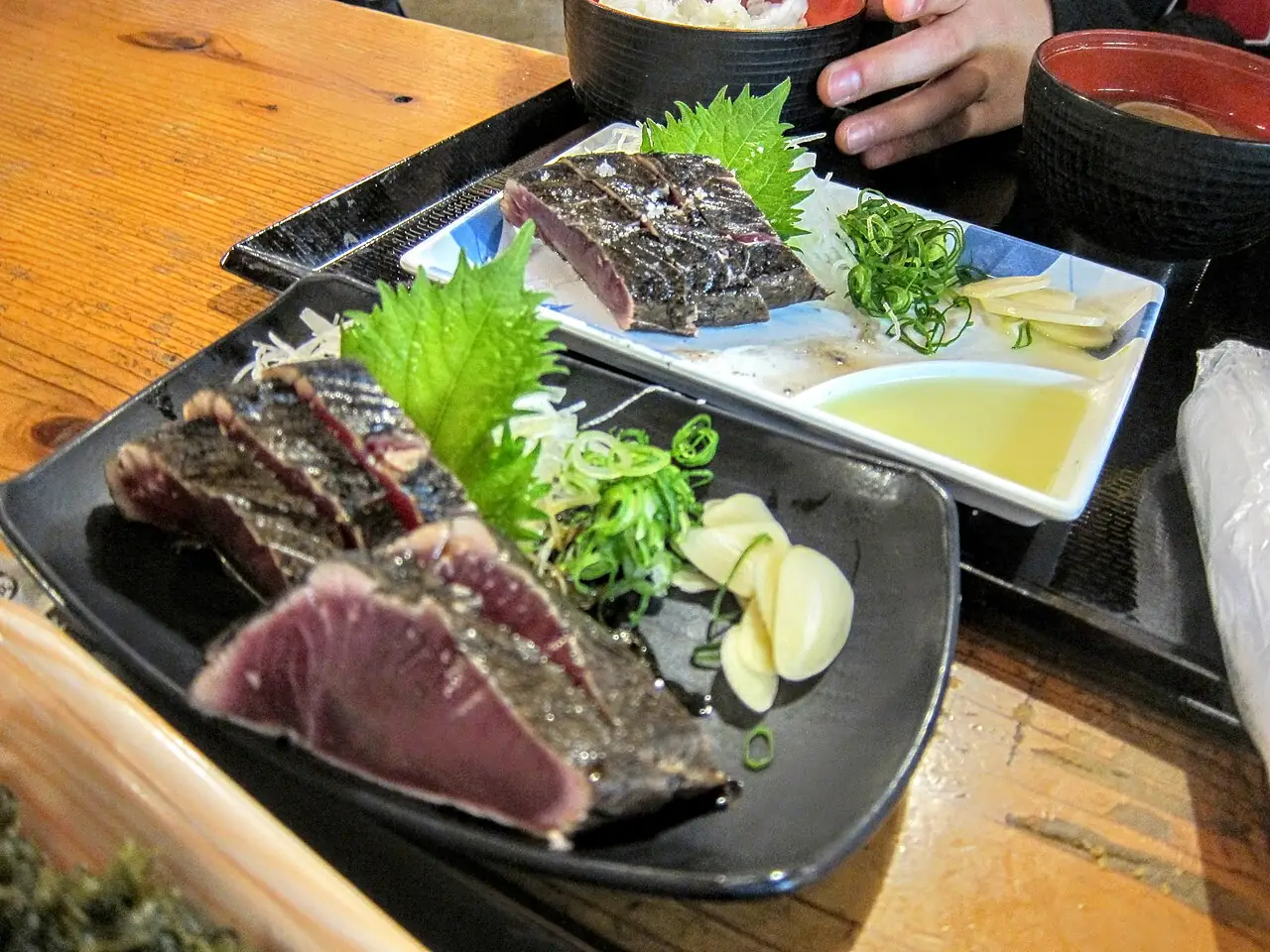
Kōchi is strongly associated with katsuo no tataki, bonito seared on the outside and served with garlic, ginger, spring onions and sauces. The Tourism SHIKOKU food guide explains the famous straw-fire grilling style, while noting that tataki does not always require straw. Salt, citrus-based ponzu and soy sauce offer different ways to eat it.
A place such as Hirome Market in Kōchi City lets visitors compare several food stalls and choose dishes independently. The market is not on every pilgrim's route, and city-centre meal choices are quite different from what is available on a remote coastal stretch. For someone walking between temples in southern Kōchi, carrying a lunch and water remains important even though the prefecture has a celebrated food culture.
Ehime: citrus and sea bream rice
Ehime is famous for its many varieties of mikan and other citrus, reflecting the mild climate of its coastal hills. Fruit, juice and citrus-based snacks are a natural way to experience this part of the island, though harvest times vary by variety.
The name tai-meshi covers two notably different sea-bream-and-rice traditions. Around Matsuyama and the eastern and central areas, sea bream may be cooked together with rice, then flaked through it. Farther south, Uwajima-style tai-meshi is made with slices of raw sea bream, a seasoned sauce and often egg, served over rice. Japan's Ministry of Agriculture's account of Ehime's regional cuisine explains the regional distinction. Neither version should be assumed to suit every dietary preference, particularly when raw fish or egg is involved.
These foods connect the prefecture's fishing communities and orchards to ordinary meals. They also illustrate why a regional speciality can mean different things depending on where in the prefecture a pilgrim stops.
Food and pilgrimage are connected, but distinct
The difference between a restaurant, a temple lodging, a small rural shop and the meal served by a ryokan matters. A traditional inn dinner may be part of a paid room-and-board arrangement, sometimes with several seasonal courses. A pilgrim staying in a guesthouse or walking independently may instead rely on a supermarket or convenience store. None of these arrangements is inherently more authentic; they simply suit different budgets, seasons and routes.
Osettai, the voluntary offering of food, drink or other kindness to pilgrims, is another tradition altogether. It is not a free catering service to plan around. Accept an unsolicited gift with gratitude when appropriate, and don't assume local residents or temples are obliged to provide one. A pilgrim can appreciate hospitality without expecting it.
Planning meals on a walking itinerary
A little advance preparation helps more than any long restaurant list:
- Check whether accommodation includes dinner and breakfast, and ask ahead about dietary needs. Some rural inns require advance meal arrangements.
- Carry enough water and food for stretches without reliable shops; a route passing through a town on a map does not guarantee a restaurant will be open.
- Consider early closing times at popular noodle shops and the possibility of sold-out dishes.
- Keep some cash, especially for small local businesses, and confirm payment methods directly.
- Respect local eating spaces, keep litter with you, and avoid delaying a temple visit solely to chase a famous meal.
For an example of food-focused walking, Lauren Breedlove's AFAR report from 17 August 2026 describes an eight-day, supported itinerary through Tokushima and Kagawa with prearranged inns and meals. It is an appealing personal account, but it does not represent the full four-prefecture pilgrimage or all styles of travel. The foods in this guide can be discovered on many different itineraries.
Further reading
- Tourism SHIKOKU: regional foods and katsuo no tataki
- Kagawa Tourism Association: Sanuki udon and how local shops work
- Tourism SHIKOKU: Tokushima's sudachi
- Japan's Ministry of Agriculture: Ehime's regional food traditions
- Tourism SHIKOKU: overview of Shikoku's traditional cuisine
- AFAR: A Food Lover's Guide to Hiking the Shikoku Temple Pilgrimage