Two dances, two histories: understanding Yosakoi and Awa Odori
Discover how Kōchi's inventive postwar Yosakoi and Tokushima's centuries-old Awa Odori express two sides of Shikoku's living festival culture.
TraditionsKōchi · Tokushima4 min read
Shikoku's two great summer dance festivals share a remarkable ability to take over the streets, but they tell very different stories about place and community. In Kōchi, Yosakoi is a relatively young tradition, created during the postwar years and constantly reinvented by its dancers. In Tokushima, Awa Odori carries a history stretching back centuries, with its distinctive music, steps and groups of performers known as ren.
To a visitor travelling the island in August, they can appear superficially similar: joyful crowds, coordinated costumes, musicians and streets transformed into performance spaces. Understanding their separate roots makes both more rewarding to watch.
Yosakoi: tradition built through reinvention
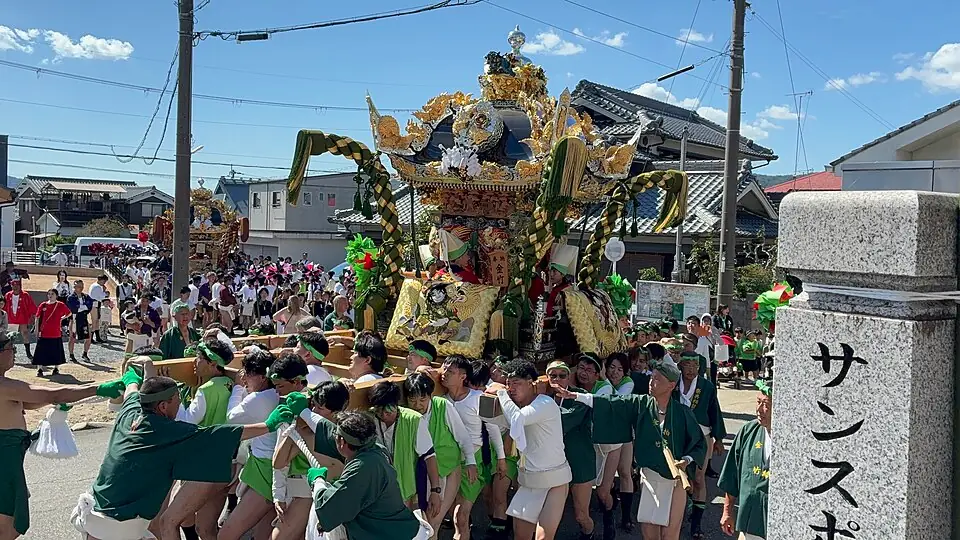
Kōchi's Yosakoi Festival begins in August 1954. The official organiser's history describes a city looking for renewed energy after the disruption of war and the postwar economic downturn. The local Chamber of Commerce and Industry supports a new event that would strengthen community well-being and draw people into shopping streets.
The first festival has 21 participating groups and 750 dancers. Over time it grows into a major cultural event, but its defining feature is not strict preservation of one dance sequence. Teams experiment with choreography, music, costume and presentation while keeping the rhythmic naruko clappers as a recognisable element.
Some groups favour carefully coordinated traditional formations, others incorporate theatrical movement, contemporary musical styles and elaborate stage design. Teams prepare together over months. The resulting performance is both personal and communal: one team's creativity becomes part of a larger citywide tradition.
The 2026 schedule places the 73rd edition on 9–12 August 2026, including an opening festival, two main days and a closing national competition. Those are dates for one documented edition, not a permanent guarantee for future programmes.
Awa Odori: music and movement across generations
Awa Odori has a much longer history. Tokushima City's official introduction describes a tradition of more than 400 years. Dance groups, or ren, develop their performance styles through continued practice, and the recognisable sound of drums, flutes and shamisen accompanies the dancers through the streets.
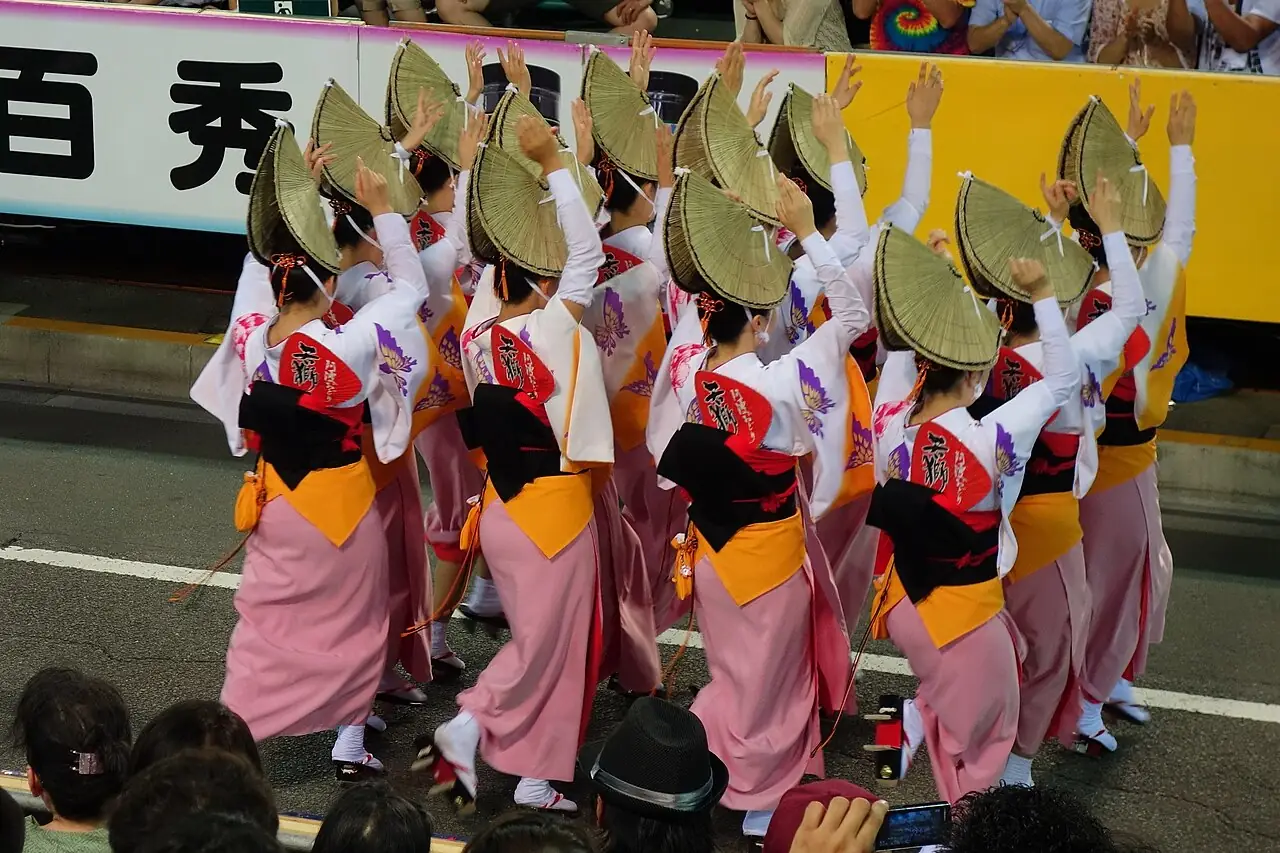
A formal street procession can offer a different experience from a performance inside a hall. Group movement is central, yet the energy comes from individual dancers as well as the interplay between the performers and the accompanying musicians. The festival belongs to everyday Tokushima culture well beyond the four main days.
The city's official guide gives 12–15 August as the customary festival period, while the 2026 programme also includes a separate opening event on 11 August 2026. This is not a single static performance replicated without variation.
For people visiting outside the main August festival, the Awaodori Kaikan houses exhibitions and scheduled performances that introduce Tokushima's dance culture year-round. The Kaikan is a distinct cultural venue, not a substitute for the scale of the street festival.
What the two traditions share
Both festivals are created and sustained by communities. Performers spend time learning music and movement together, organizers coordinate venues and processions, and local streets become places where visitors and residents share an intense public experience.
Both also demonstrate how a cultural tradition can grow beyond the place where it began. Yosakoi has spread from Kōchi to many other Japanese communities, while Awa Odori is performed outside Tokushima as well. Their identities nevertheless remain tied to their respective cities.
For travellers, it matters that neither is simply a costume show. Individual teams have rehearsals, history, local affiliations and pride. Watching respectfully means leaving room for performers, following crowd-control instructions and recognising that street closures protect participants as well as spectators.
Experiencing the festivals on a Shikoku journey
The August calendar creates a natural connection between the two cities. In 2026, Kōchi's programme runs 9–12 August, while Tokushima's main Awa Odori nights take place 12–15 August. A visitor may therefore choose to experience both, though accommodation, tickets and local travel require planning.
You do not need to participate in a formal competition to appreciate the events. Different public streets and viewing areas offer varying atmospheres, although reserved seating, some indoor events and particular grandstands have their own ticket conditions.
For someone travelling the Shikoku Henro, the festivals are cultural opportunities, not required pilgrimage ceremonies. They can enrich a journey with living local expression, but their crowds may also affect access, room availability and transport. Walkers should verify the current year's dates before making a festival a fixed itinerary stop.
Two forms of cultural continuity
Yosakoi demonstrates that a tradition can become deeply rooted in a community even when its history begins in living memory. Awa Odori shows how an older performance culture remains alive through present-day people and evolving interpretations. Neither needs to be considered more authentic because of age.
Together, they offer two powerful ways to understand Shikoku: not only through its sacred sites and landscapes but through the people who continually recreate their cultural inheritance.
Further reading: Yosakoi Festival history; 73rd Yosakoi Festival programme; Tokushima City, About Awa Odori; Awaodori Kaikan visitor programme.