Taikodai and Oshikomi: how Shōdoshima's autumn shrine festivals work
Shōdoshima’s taikodai festivals bring communities together through giant drum floats, shrine rites, ceremonial pole balancing and the maritime oshikomi procession.
HeritageKagawa · Shōdoshima3 min read
Shōdoshima's autumn festivals are not one central parade but a chain of neighbourhood ceremonies. On designated October dates, Hachiman shrines across Shōdoshima and Teshima receive taikodai, large decorated drum floats carried by coordinated teams. The island's ceremonial traditions make the connections between villages, shrines and the Seto Inland Sea remarkably visible.
What is a taikodai?
A taikodai (太鼓台) is a festival float built around a drum and transported by a large team of carriers. Instead of being quietly wheeled to a shrine, floats are lifted, raised, tilted and carried through demanding spaces. The visible actions form part of a collective dedication by a district community.
Tonosho Town's account describes floats weighing approximately one to two tonnes, commonly moved by many residents working together. Each settlement maintains its own float, and individual shrines host their ceremonies on separate days. The experience therefore belongs as much to the communities as to the physical shrine buildings.
Stone steps at Uchinomi Hachiman Shrine
At Uchinomi Hachiman Shrine in the Umaki district, the approach itself becomes a test of coordination.
KSB's 2026 report records roughly 60 people carrying a taikodai through the torii and up the steps toward the main sanctuary. The float is raised and tilted during the gradual climb. The scene provides a striking example of a tradition shaped by the actual layout of a shrine, not by a generic festival stage.
Uchinomi also features nobori-sashi (幟さし), the balancing of an approximately 13-metre festival pole. The 2026 report describes a skill tradition said to be more than 150 years old. The display is about control and training as much as strength.
Oshikomi: when a drum float arrives by sea
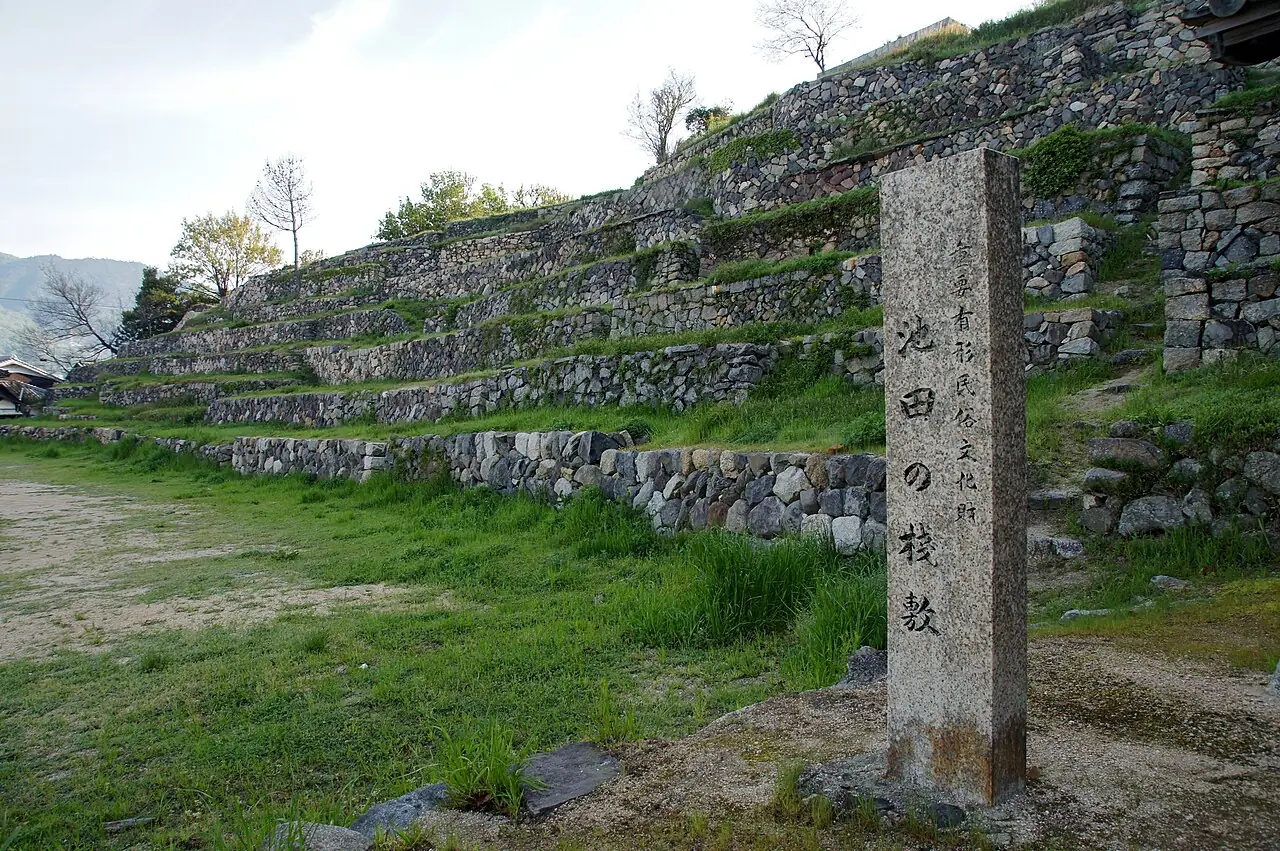
The most geographically distinctive scene is found at Kameyama Hachimangū in the Ikeda district, where the 2026 festival took place on 16 October 2026.
oshikomi (押し込み) brings a taikodai aboard a traditional vessel from the Kamikō district at the tip of the Mitō Peninsula. Boatmen propel it into Ikeda Bay, while another team receives the float at the shore and carries it toward the shrine.
This is not merely a picturesque transport method. It preserves a relationship between coastal settlements, ceremonial travel and a shared shrine. The tourism association records the ritual's revival in 1980 after a hiatus. Its account also notes that the boatborne practice formerly involved more districts than today.
A 2026 OHK/FNN report documents 13 taikodai taking part at Kameyama and raises concern about the challenge of maintaining boatborne participation as communities shrink. The number is an observation for that edition, not a permanent figure.
One season, distinct shrines
In the 2026 calendar, celebrations began on 11 October 2026 at Fukuda Hachiman Shrine and continued through Shikai, Tonosho, Fuchisaki, Uchinomi and Ikeda. The associated Teshima shrines held events on 18 October 2026 and 21 October 2026.
Two of the 2026 festivals took place on 15 October 2026, so visitors need to choose which shrine and district to attend. The official island calendar gives the normal dates but does not supply a single timetable for every procession or a universal route linking them.
These festivals are living Shinto practices. Visitors can appreciate the extraordinary effort involved while leaving space for local residents and the carrying teams, respecting roped areas and any instructions about photography.
References and further reading
- Shōdoshima Tourism Association: Oshikomi (Japanese)
- Shōdoshima Tourism Association: 2026 event calendar
- Kagawa Tourism Association: descriptions of the autumn taikodai shrine ceremonies
- Tonosho Town: local autumn festival tradition
- KSB: Uchinomi festival, 16 October 2026
- OHK/FNN: Kameyama Hachimangū and the oshikomi, 16 October 2026